
The first properly cold morning of winter is when most Lyriq owners go looking for Snow/Ice Mode — usually right after noticing the range estimate has dropped and wondering whether the car, or the weather, is to blame. The short answer is reassuring: Cadillac Lyriq Snow/Ice Mode is a traction setting, not a range setting. It softens how the car responds to your right foot so the tyres keep their grip — and the winter range loss that worries people comes from somewhere else entirely: cold battery chemistry, cabin heating, winter tyres and the road itself.
This guide explains what the mode changes, when to use it, why range falls in winter, and the habits that help most. For the bigger picture, see our pillar guide: Do the Driving Modes in Cadillac Lyriq Offer Different Ranges or Battery Usages?
The Short Answer
Snow/Ice Mode adjusts pedal tuning for traction on slippery surfaces, and on AWD models also modifies eAWD and steering. Cadillac publishes no official range figure for any individual drive mode — EPA ratings are by configuration, not by mode — and the mode does not save battery: it is a safety tool, not an efficiency one. The manual is also clear that it is not designed to pull you out once the car is already stuck.
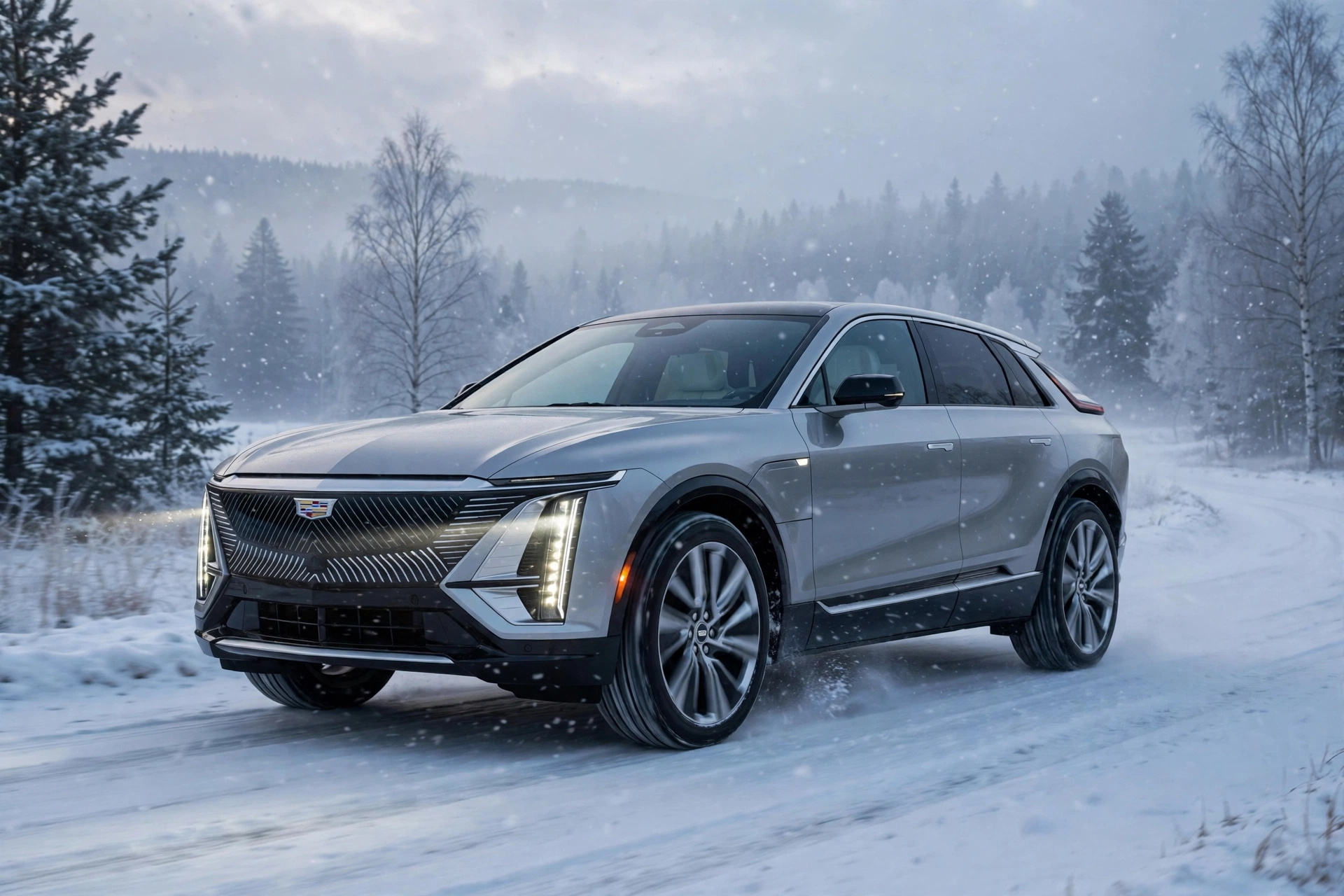
What Snow/Ice Mode Actually Changes
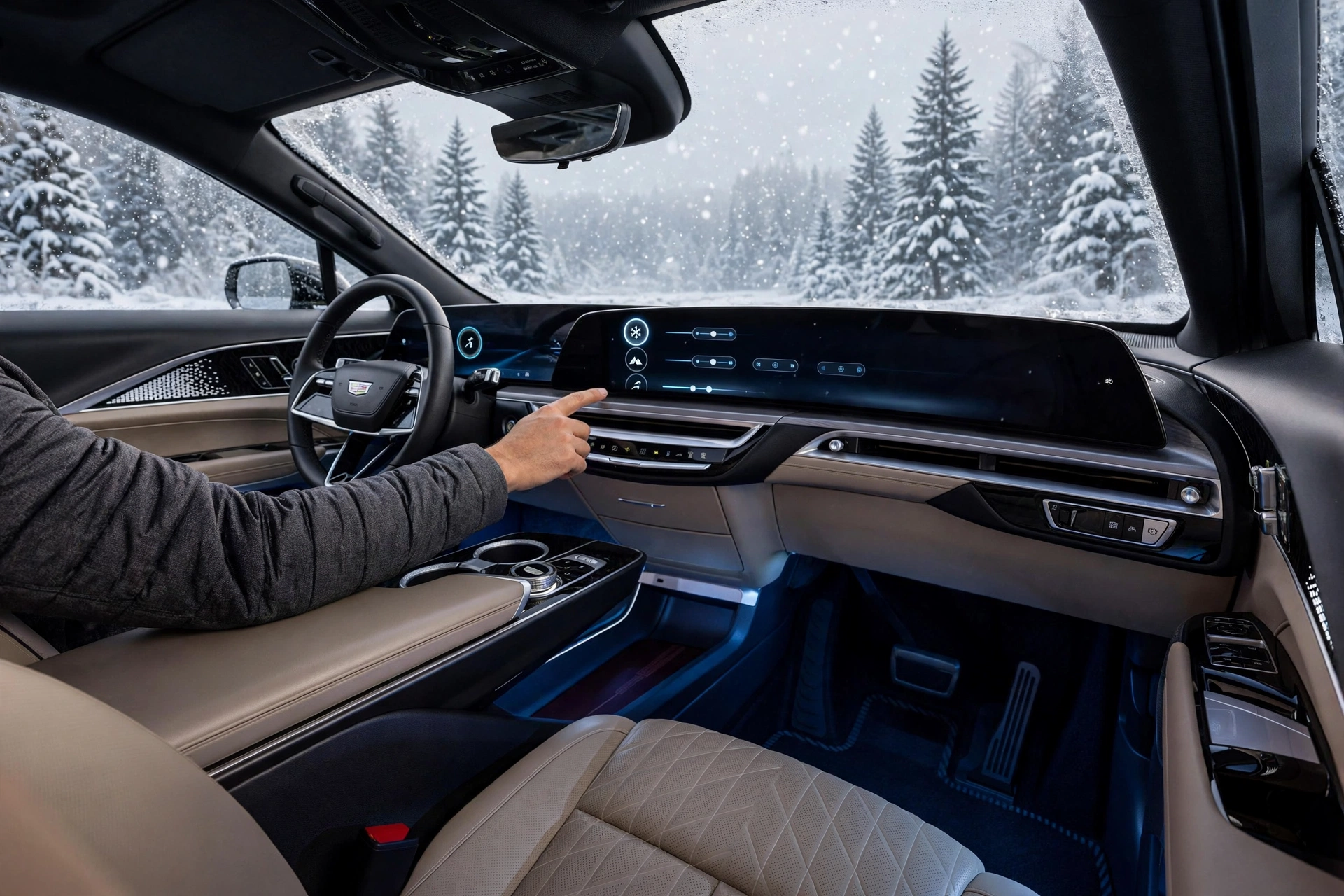
You switch modes in the Drive Mode app on the infotainment screen, alongside Tour, Sport and My Mode. Cadillac’s owner’s manual describes it plainly: use it for snow-covered roads, because the mode “adjusts pedal tuning to optimise traction on slippery surfaces.”
In practice, three things change:
1. A softer, more gradual accelerator. Electric motors deliver torque instantly — wonderful on dry tarmac, a liability on ice, where a normal prod of the pedal can spin the wheels. Snow/Ice Mode stretches the response out, so power arrives gently and smooth inputs become the default.
2. Traction and stability management that steps in earlier. Both systems are primed to catch slip sooner and trim power before a small slide becomes a big one — the car feels calmer, because it is.
3. AWD torque handling and steering (AWD models). The manual notes that Snow/Ice Mode also modifies the eAWD system and the steering, managing torque between the motors with grip, not performance, as the priority. On rear-wheel-drive models the pedal and traction changes still apply; there is simply no front motor to manage.
What it does not change matters too: the battery is the same 102 kWh pack in every mode, with no hidden “winter map” that locks away range.
When to Use Snow/Ice Mode — and When Not To
Use it when: the road is snow-covered, icy, slushy or frosty — especially pulling away, climbing gentle inclines, and where surfaces change from cleared tarmac to packed snow. It also suits freezing rain, when grip can vanish without warning.
Switch back to Tour when: the roads are dry. Cadillac warns that Snow/Ice “can compromise the acceleration on dry asphalt” — the lazy pedal that protects you on ice makes the car feel flat when grip is plentiful.
Do not rely on it when you are already stuck. The manual states it is not intended for a vehicle stuck in sand, mud, ice, snow or gravel: it prevents trouble for moving cars, not recover buried ones.
Does Snow/Ice Mode Reduce Range? The Official Numbers
Here is the fact most articles on this topic bury: neither Cadillac nor the EPA publishes a range figure for Snow/Ice Mode — or for any other Lyriq drive mode. Any site quoting an exact Snow/Ice percentage has estimated it, not measured it. What Cadillac does publish is range by configuration, for the 2026 Lyriq with its 102 kWh battery:
| 2026 Cadillac Lyriq configuration | EPA-estimated range |
|---|---|
| Single-motor RWD | Up to 326 miles |
| Dual-motor AWD (11.5 kW charging) | 319 miles |
| Dual-motor AWD (19.2 kW charging) | 303 miles |
| LYRIQ-V (dual-motor AWD) | 285 miles |
Cadillac adds that actual range varies with temperature, terrain, battery age, loading and driving style — and temperature heads that list, which brings us to the real story.
Why Your Lyriq’s Range Really Falls in Winter
If your range estimate drops sharply between October and January, four factors do almost all of the damage. The drive mode is not one of them.
Cold battery chemistry. A lithium-ion battery is a chemical system, and chemistry slows in the cold. A cold-soaked pack delivers energy less readily and accepts charge more slowly, so range and charging speed suffer until it warms up — in every EV, not just the Lyriq.
Cabin heating — usually the biggest single drain. A petrol car heats its cabin with free waste engine heat; an EV spends battery energy on every degree of warmth. FuelEconomy.gov, summarising AAA testing of electric cars generally, found that at 20°F (-7°C) with the cabin heater running, an EV’s range could fall by around 41% — while the same cold without cabin heating cost only about 12%. General EV test figures, not Lyriq measurements — but they show where the energy goes.
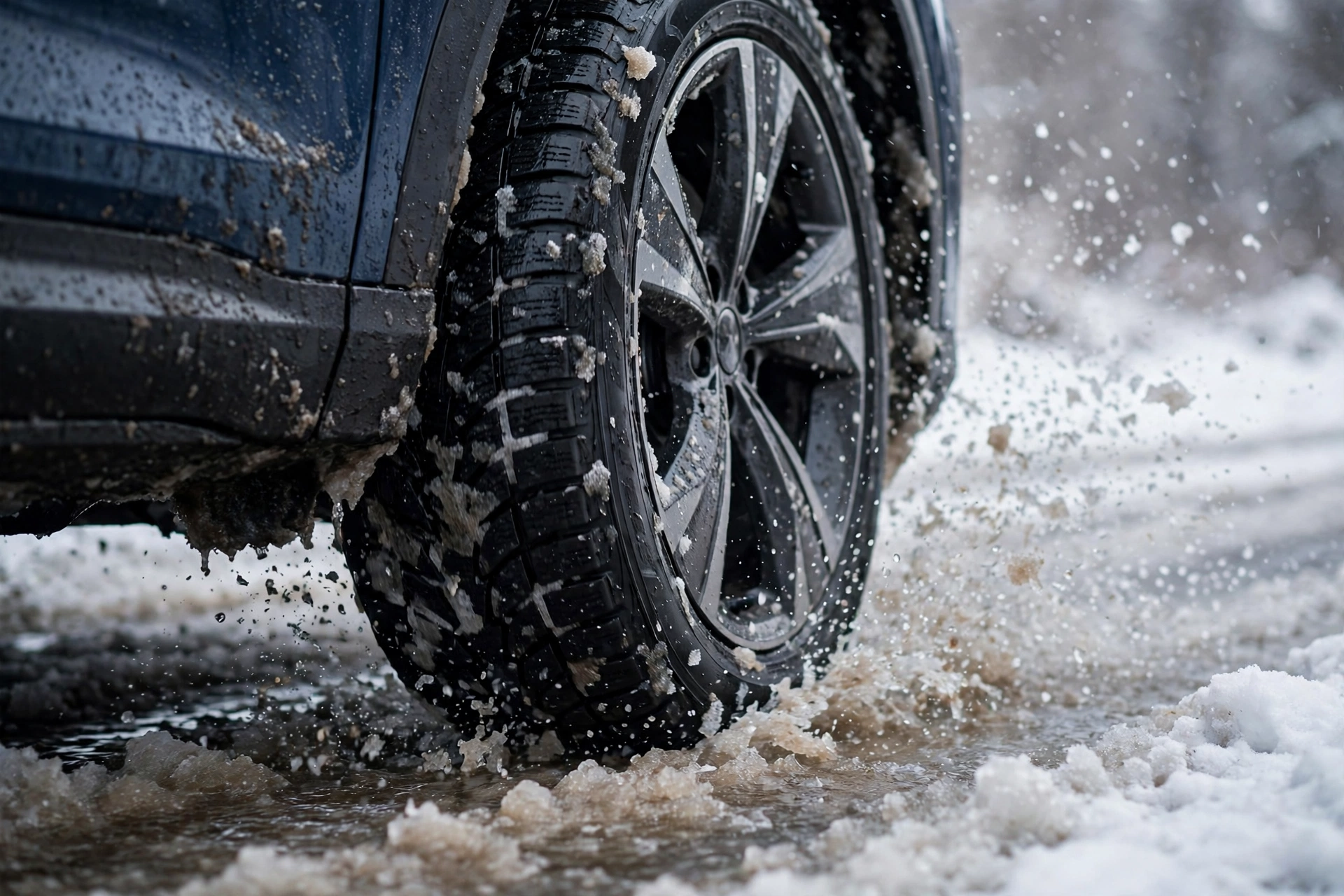
Winter tyres and rolling resistance. Winter tyres use softer compounds and aggressive tread to bite into snow, and that grip costs energy on every mile. Slush and snow-covered roads add rolling resistance, and denser cold air increases drag.
Short trips and cold starts. Every cold start re-heats a frozen cabin and battery from scratch, so five short journeys use more energy than one long one — the warm-up penalty is paid five times over.
So, Does Snow/Ice Mode Save Battery?
No — and it was never meant to. Snow/Ice Mode is a safety feature, and judging it as an efficiency feature misses the point.
There is one indirect effect. Because the mode forces gentle acceleration, drivers using it tend to make the smooth inputs that are efficient in any mode. If your range looks slightly better on a snowy day in Snow/Ice than on a similar day in Tour, that is your right foot behaving itself, not the mode generating energy. Traction interventions can spend small amounts of energy managing slip — but either way, the weather matters far more than the mode.
The Lyriq Winter Checklist: Habits That Actually Help
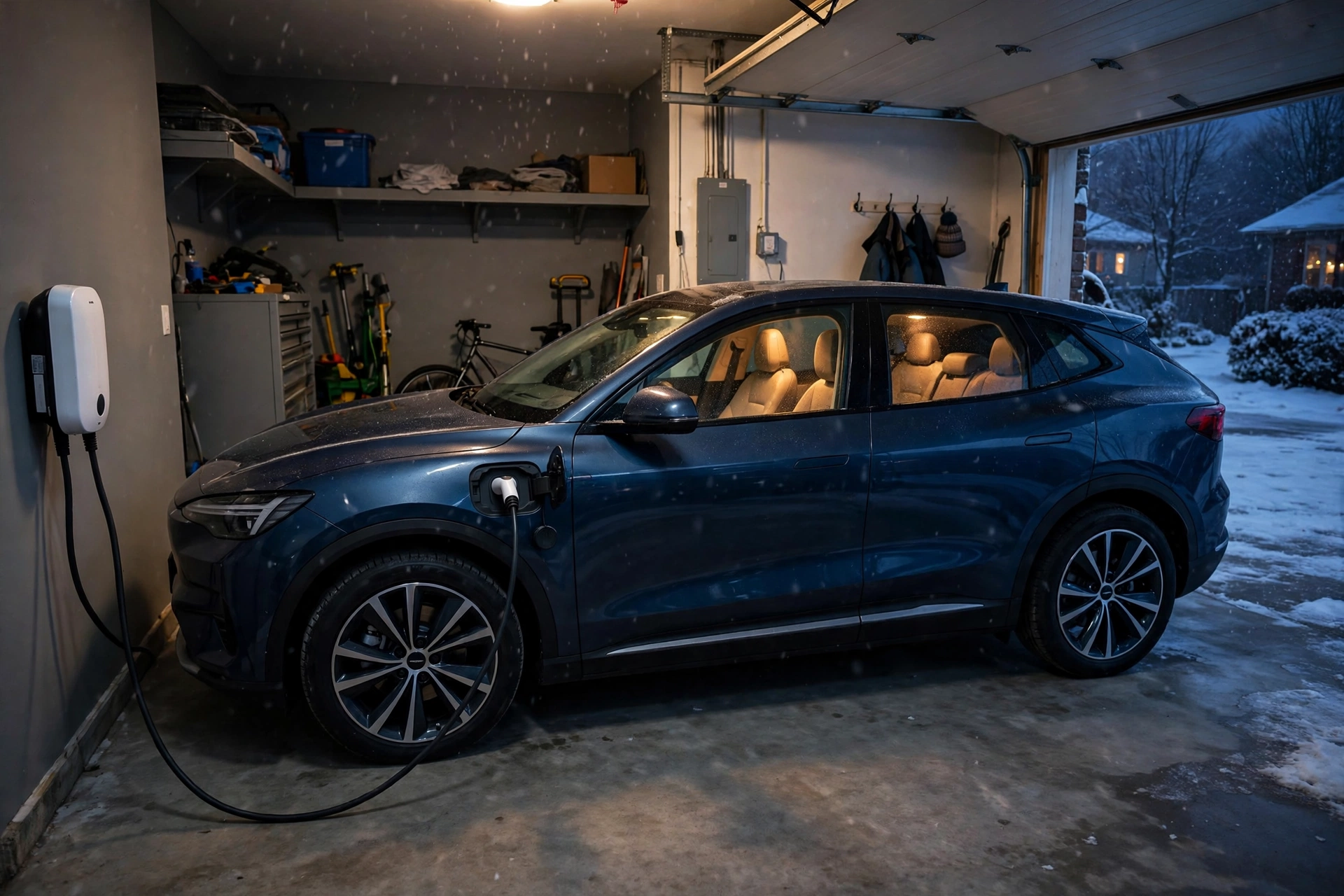
Precondition while plugged in. The U.S. Department of Energy’s winter guidance puts this first: warm cabin and battery before unplugging, on mains power, leaving more charge for the road.
Heat yourself, not the whole cabin. Heated seats and a heated wheel warm you directly for a fraction of the energy of hot air — rely on them, and keep cabin temperature modest.
Watch your tyre pressures. Pressure falls with temperature, and under-inflated tyres add resistance and wear. Check them on a cold morning; set them to the placard values.
Fit winter tyres if your winters are real ones. The biggest safety upgrade for snow and ice — no drive mode compensates for the wrong rubber.
Be careful with One-Pedal Driving on ice. Straight from Cadillac’s manual: on slippery roads, turn off cruise control, switch One-Pedal Driving off, keep traction and stability control on, select Snow/Ice Mode, and avoid the Regen on Demand paddle. Strong regen on slick surfaces can unsettle the car; blended friction braking is safer.
Charge smarter in the cold. DC fast charging is slower with a cold pack, so let the battery warm up — ideally by preconditioning en route to a charger — before expecting full speeds. Keep the car plugged in on freezing nights; for long trips, the Department of Energy suggests charging higher than your usual daily level.
Myth vs Reality
| Myth | Reality |
|---|---|
| Snow/Ice Mode cuts range by a fixed percentage | No per-mode range figures exist. Winter losses come from cold, heating, tyres and roads. |
| Snow/Ice Mode is an eco mode for winter | It is a traction and stability tool. Any efficiency gain is a side effect of gentler acceleration. |
| The mode can get you unstuck from deep snow | The manual says it is not intended for use when the vehicle is stuck in snow, ice, mud or gravel. |
| Winter range loss means the battery is faulty | Cold temporarily slows battery chemistry; range recovers as temperatures rise. |
| AWD alone makes winter driving safe | AWD helps you move; winter tyres and gentle inputs help you stop and steer. |
Frequently Asked Questions
Does Snow/Ice Mode drain the battery faster?
Not in any measurable, official way — Cadillac publishes no per-mode consumption figures. Winter energy use rises because of cold chemistry, cabin heating, winter tyres and road conditions; the mode only changes pedal, traction, AWD and steering.
Can I use Snow/Ice Mode in heavy rain?
Yes. Its gentler pedal and earlier traction intervention help on standing water and slick wet roads generally. Switch back to Tour when conditions dry out.
Does Snow/Ice Mode work on the rear-wheel-drive Lyriq?
Yes. The softened pedal and traction management apply on RWD models too; only the eAWD adjustments are dual-motor-only, since RWD cars have no front motor.
Should I turn off One-Pedal Driving in snow?
Cadillac’s owner’s manual says yes for slippery roads: turn One-Pedal Driving off, avoid the Regen on Demand paddle, turn off cruise control, keep traction and stability control on, and select Snow/Ice Mode.
How much range will my Lyriq lose in winter?
There is no official figure; it depends on temperature, trip length, heating use and tyres. As a general EV benchmark, FuelEconomy.gov’s summary of AAA testing found range could drop by around 41% at 20°F (-7°C) with the heater running — though short, very cold trips can be worse. Preconditioning while plugged in shrinks the loss most.
Conclusion
Cadillac Lyriq Snow/Ice Mode does one job, and does it well: it keeps a powerful, heavy electric SUV composed and grippy when the road turns hostile, by softening the accelerator, managing traction and — on AWD models — supervising torque between the motors. It neither saves your battery nor steals it — winter range is taken by physics: a cold battery, a hungry heater, gripping tyres and slushy roads.
Use the mode whenever the surface is slippery, switch back to Tour on dry roads, precondition while plugged in, and let heated seats do the warming. To fine-tune how your Lyriq feels the rest of the year, read our guide to Cadillac Lyriq My Mode Explained: Best Settings.
References
- Cadillac Pressroom — 2026 LYRIQ Specifications: https://pressroom.cadillac.com/gmbx/us/en/cadillac/pressroom/vehicles.detail.html/content/Pages/vehicle/us/en/cadillac/lyriq/2026.html
- FuelEconomy.gov (U.S. EPA / DOE) — 2026 Cadillac LYRIQ listing: https://fueleconomy.gov/feg/Find.do?action=sbs&id=49632
- U.S. Department of Energy — Winterizing Your Electric Vehicle: https://www.energy.gov/articles/winterizing-your-electric-vehicle
- Cadillac LYRIQ Owner’s Manual — Driver Mode Control and Winter Driving sections, via GM: https://contentdelivery.ext.gm.com/bypass/gma-content-api/resources/sites/GMA/content/staging/MANUALS/8000/MA8876/en_US/2.0/GTK_2024_Cadillac_LYRIQ_84892746_B.pdf