
The 2026 Cadillac Lyriq-V is the quickest Cadillac ever built, and two features are responsible: V-Mode and Velocity Max. Together they turn a luxury electric SUV into a 615-horsepower machine that hits 60 mph in 3.3 seconds. But performance like that raises the question every EV owner asks: what does it do to the battery and the range?
This guide answers that honestly. Cadillac publishes clear performance numbers for the Lyriq-V, but no separate range penalty for Velocity Max — any website quoting an exact percentage loss for using it is guessing. Here is what both features do, what they cost in energy, and how to use them well.
For the regular car’s Tour, Sport and Snow/Ice settings, see our complete guide on whether the driving modes in the Cadillac Lyriq offer different ranges or battery usages.
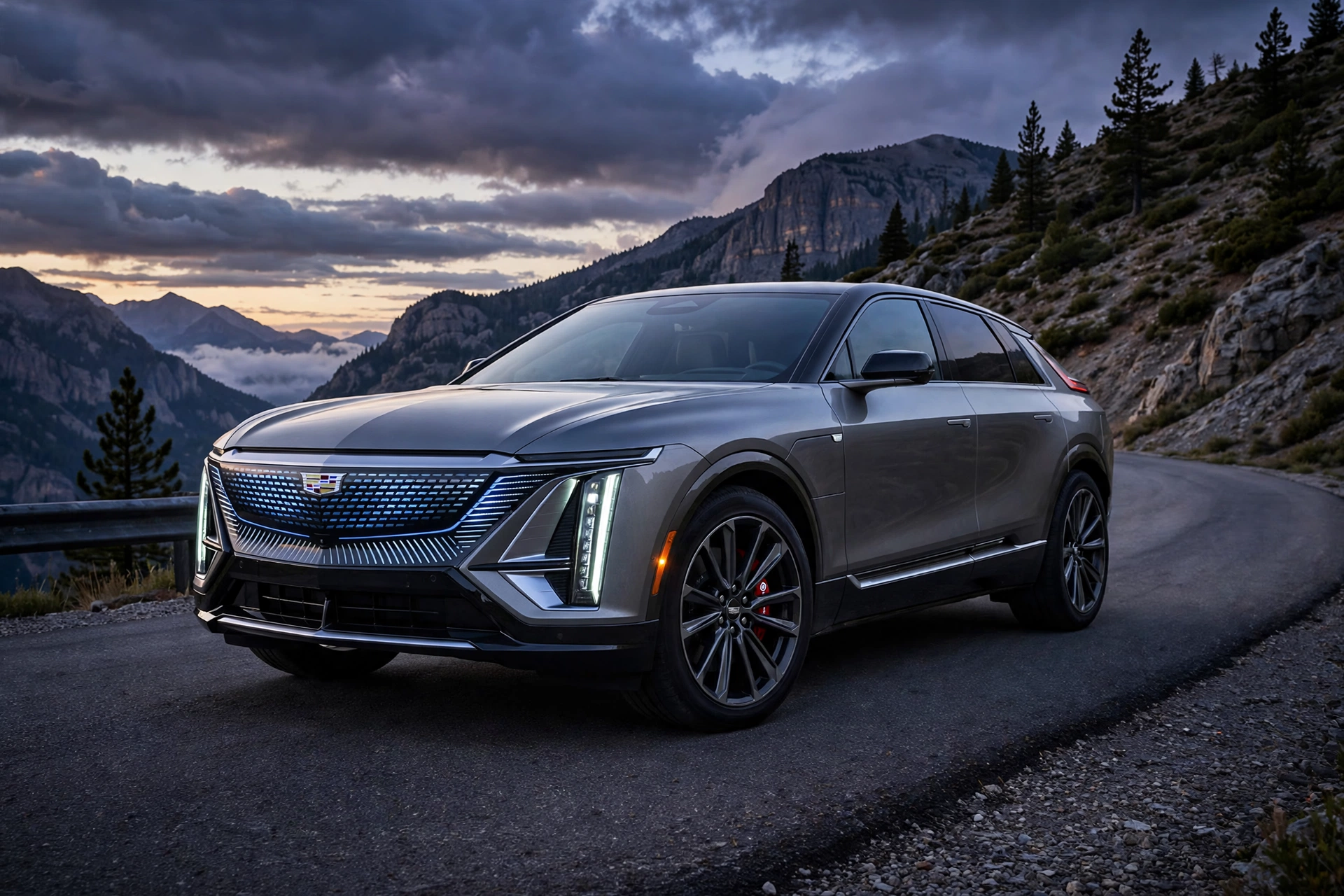
What Is V-Mode on the Cadillac Lyriq-V?
V-Mode is a saved performance preset: instead of adjusting individual settings every time you want the car at its sharpest, you configure your setup once and V-Mode stores it for instant recall.
According to Cadillac, V-Mode lets drivers save performance-focused settings, including Competitive Mode and a unique sound experience. The settings span accelerator response, brake feel, suspension firmness, steering weight and the car’s synthesized sound — a multi-layered signature sound that is part of the V-Series character.
Access is instant: a dedicated V button sits on the steering wheel, and V-Mode can also be opened through the Drive Mode app on the 33-inch-diagonal advanced LED display.
What Is Velocity Max — and What Does It Actually Unlock?
Velocity Max is the driver-selectable feature that unleashes the Lyriq-V’s full capability. Engaged, the dual-motor all-wheel-drive system delivers its complete Cadillac-estimated output:
- 615 horsepower
- 650 lb-ft (880 Nm) of torque
- 0-60 mph in 3.3 seconds (Cadillac-estimated, with Launch Control, on a closed course)
That makes the Lyriq-V the quickest Cadillac ever — despite being a 5,980 lb luxury SUV.
Launch Control works inside both V-Mode and Velocity Max, managing traction and torque delivery from a standstill so the car launches hard and consistently. Competitive Mode adds a suite of traction-management features engineered to increase agility, intended for closed courses.
These are peak numbers, delivered on demand — the Lyriq-V does not make 615 hp continuously. Velocity Max simply removes the software ceiling. That distinction matters for the battery question.
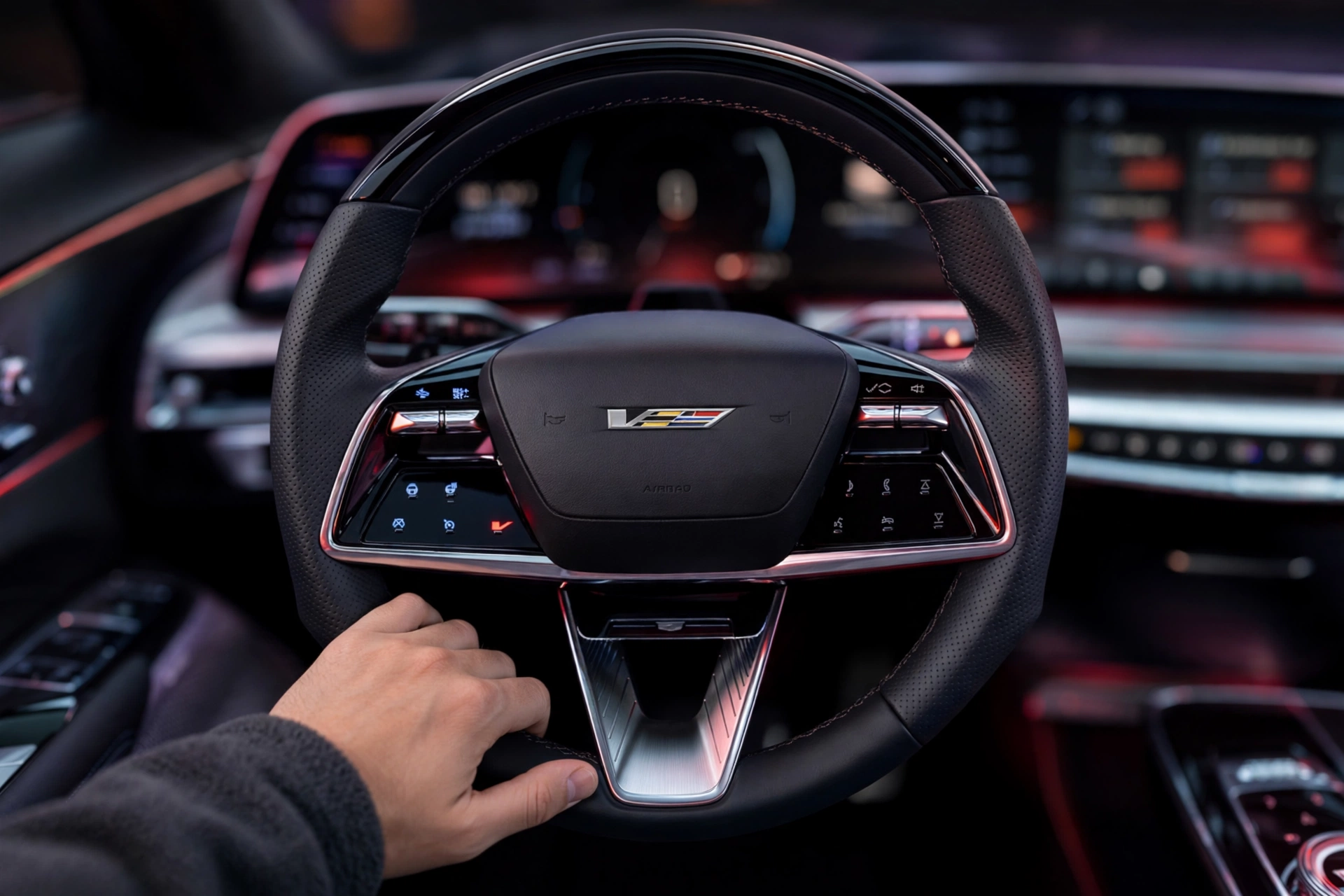
The Honest Battery and Range Answer
Here is the part most articles get wrong, so let’s be precise.
The Lyriq-V is EPA-rated at 285 miles of range as a vehicle. That rating belongs to the whole car — its motors, wheels, tyres, weight and tuning — measured on the EPA’s standard cycles. It is not a “V-Mode range” or a “Velocity Max range”: the EPA does not test drive modes separately, and Cadillac has never published a per-use cost for Velocity Max. If you see one quoted elsewhere, it was invented.
The physics, however, is not in dispute:
Power is the rate of energy use. Every Lyriq, V included, stores 102 kWh of usable energy; horsepower describes how fast it is spent. Gentle cruising draws a modest, steady flow. A full-power Velocity Max launch demands an enormous flow for a few seconds. One launch uses only a small slice of the pack — but repeat them and the slices stack up, and the range estimate falls fast.
Heat is the hidden cost. Very high current through the battery, inverters and motors generates heat, and managing it takes energy too, as cooling systems work harder. That is why back-to-back runs cost more than a single one: the car spends energy on performance and on cooling itself at once.
Hard driving multiplies everything. Aggressive acceleration comes with hard braking and higher speeds, and aerodynamic drag rises sharply with speed — so a spirited drive uses far more energy per mile than the same road driven calmly, whatever mode is selected.
In short: Velocity Max does not shrink your battery or change your rating. It gives you the fastest possible way of spending the energy you have — minor on a journey if used occasionally, but a constant maximum-attack style drains the pack noticeably faster, exactly as flooring any 615 hp vehicle would.
Lyriq-V vs Standard Lyriq: Range Compared
Every Lyriq uses the same 102 kWh pack. What changes is the hardware spending that energy:
| 2026 Cadillac Lyriq configuration | Powertrain | EPA-estimated range |
|---|---|---|
| Single Motor RWD | 365 hp | 326 miles |
| Dual Motor AWD (standard 11.5 kW charging) | 515 hp | 319 miles |
| Dual Motor AWD (available 19.2 kW charging) | 515 hp | 303 miles |
| Lyriq-V Dual Motor AWD | 615 hp in Velocity Max | 285 miles |
The 34-mile gap to the standard AWD car is the price of the V’s hardware, not a tax for pressing the V button: even a Lyriq-V that never engages Velocity Max is still rated at 285 miles — the rating was earned by the vehicle itself.
The same principle applies to the regular car’s Sport setting, covered in our guide to whether Cadillac Lyriq Sport Mode uses more battery: modes change behaviour; hardware and your right foot decide consumption.
Why Is the Lyriq-V’s Range Lower in the First Place?
Several engineering choices, all confirmed in Cadillac’s own specifications, explain the 285-mile rating:
- High-output motors. The V’s dual motors are tuned for a 615 hp ceiling, not pure efficiency — peak-power motors rarely match cruising-focused units for efficiency.
- 22-inch wheels and summer tyres. The V rides on 22-inch wheels with low-profile 275/40R22 summer-only tyres. Wide, grippy performance tyres carry higher rolling resistance than efficiency-focused tyres — grip and economy pull in opposite directions.
- Performance chassis hardware. A lowered suspension, Continuous Damping Control and large Brembo front brakes add capability and mass. At 5,980 lb, the Lyriq-V is heavy, and moving mass costs energy.
- Cooling demands. Hardware built for sustained high output needs serious thermal management, which itself consumes energy.
None of this is a flaw — it is the deliberate trade every performance EV makes, and 285 miles still covers daily driving comfortably for most owners.
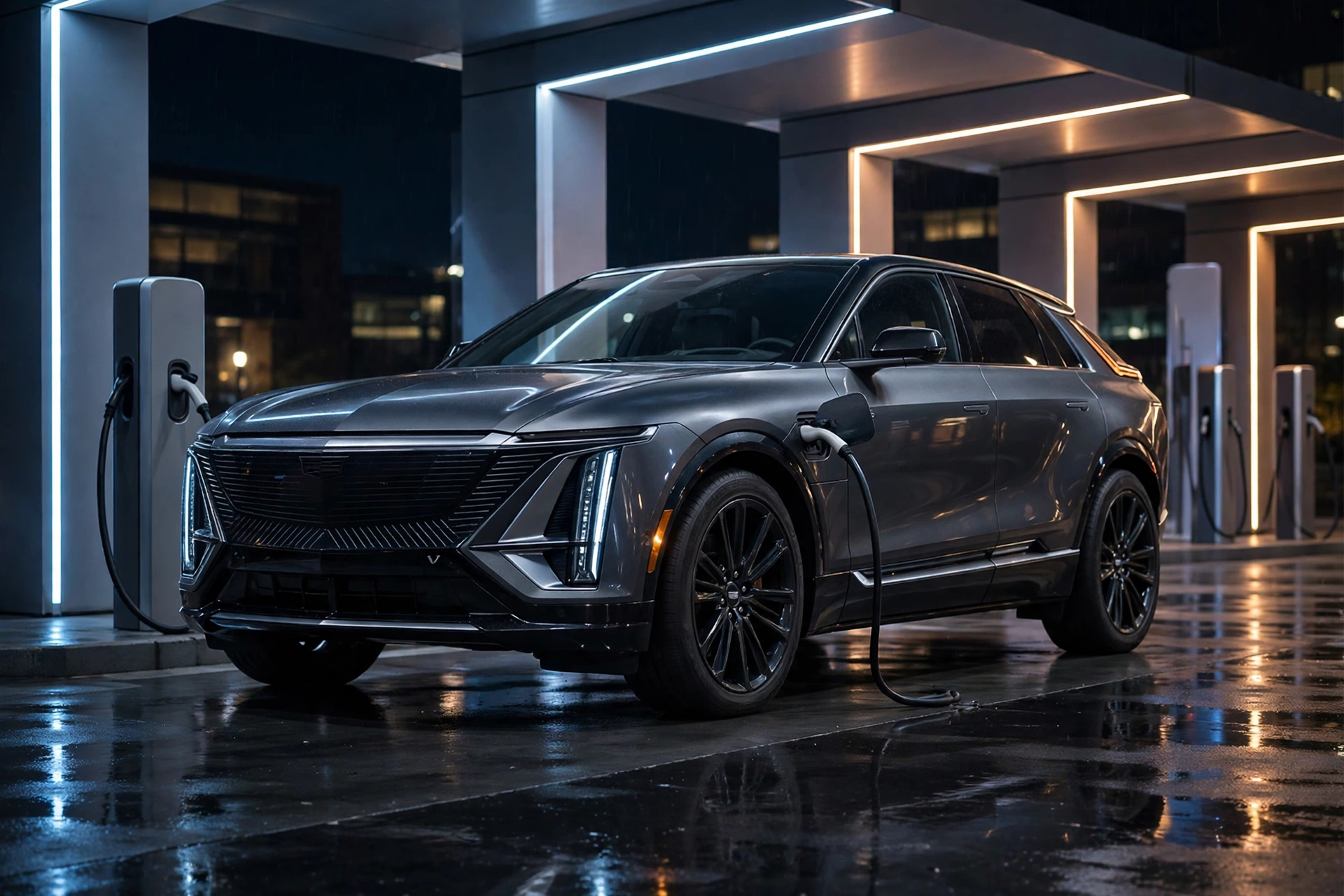
State of Charge and Temperature: Two Silent Performance Factors
Two things quietly decide how much performance — and range — your Lyriq-V delivers on a given day, and neither is a drive mode.
Battery state of charge. The Lyriq-V delivers its strongest performance with a healthy charge in the pack. As charge runs low, the car protects the battery by limiting how much power can be drawn — so do your launches earlier in the charge, not at 15 percent. A fuller battery is also more forgiving of the energy a few hard runs consume.
Battery temperature. A cold battery has higher internal resistance, cutting both the power it can deliver and the efficiency it returns — one reason every EV loses range in winter. At the other extreme, repeated maximum-effort driving heats the pack and motors, and the car spends energy on cooling. A comfortably warm battery is the ideal starting point for a full-strength launch.
When Should You Actually Use Velocity Max?
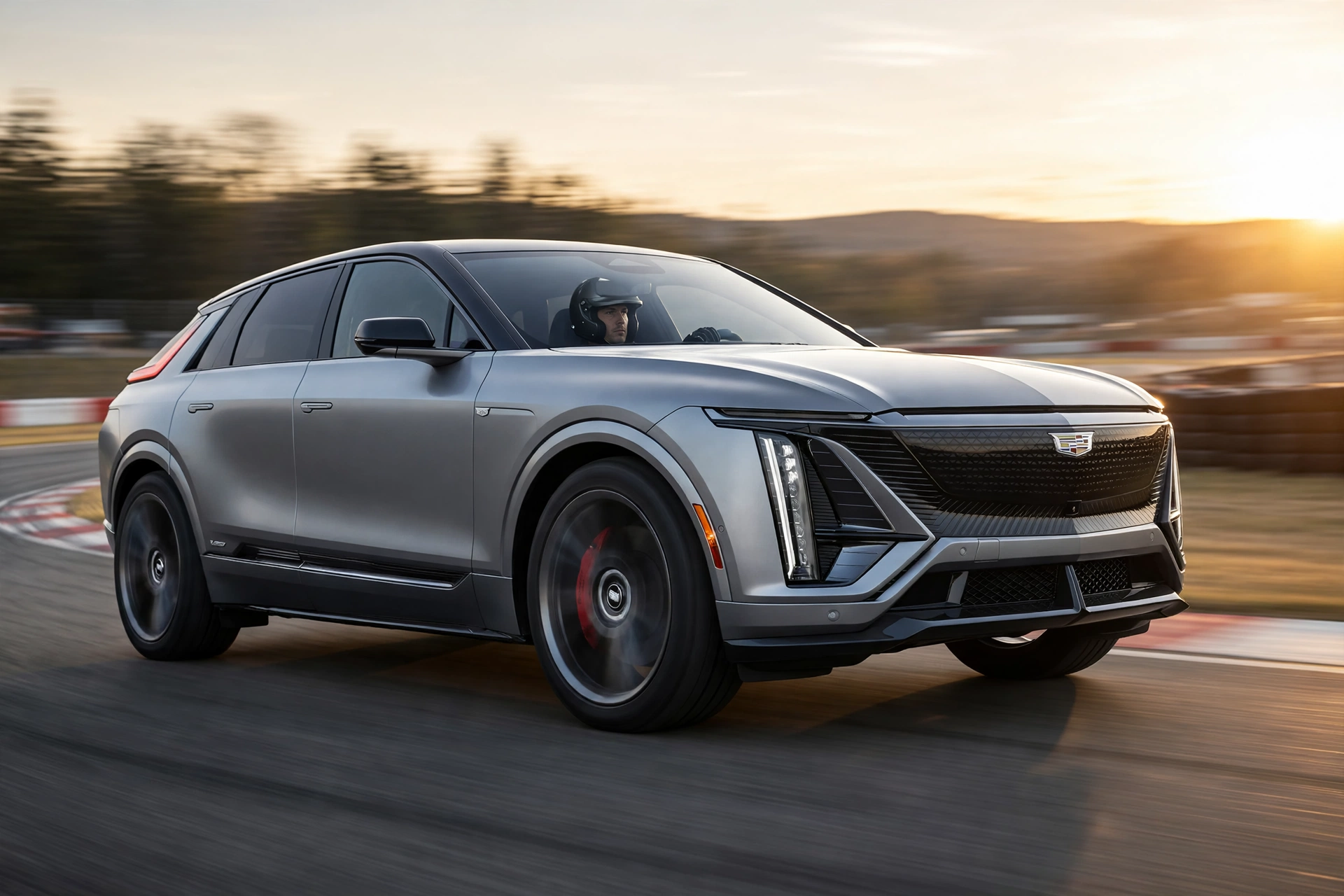
Velocity Max and Launch Control were engineered for short, deliberate bursts, and Cadillac frames the 3.3-second figure around closed-course use — a track day, an autocross, or a safe, legal stretch of road where one clean launch can be enjoyed properly.
It makes little sense on the daily commute, where a 615 hp ceiling buys nothing in traffic. A good rhythm is V-Mode for a favourite road, Velocity Max for moments that deserve it, and standard modes for everything else — and DC fast charging replaces up to 75 miles of spent range in about 10 minutes.
FAQs
Does Velocity Max reduce the Lyriq-V’s range?
There is no official per-use penalty. The Lyriq-V is EPA-rated at 285 miles as a vehicle, and Cadillac publishes no separate Velocity Max figure. Full-power driving spends energy far faster than gentle driving, so frequent launches shorten your distance per charge — but no verified percentage exists.
What is the difference between V-Mode and Velocity Max?
V-Mode stores your personalized performance settings — Competitive Mode, sound, throttle and chassis feel — recalled instantly via the steering-wheel V button or Drive Mode app. Velocity Max is the powertrain unlock: the full 615 hp and 650 lb-ft, enabling 0-60 mph in 3.3 seconds with Launch Control.
Why does the Lyriq-V have less range than the standard Lyriq if both have a 102 kWh battery?
Range depends on how efficiently the hardware uses the energy. The V’s high-output motors, 22-inch wheels with summer tyres, extra weight and performance cooling consume more energy per mile — hence 285 EPA miles versus up to 326 for the rear-wheel-drive Lyriq.
Can I use Launch Control every day?
Launch Control is built for hard straight-line acceleration, and Cadillac quotes its figures for closed-course use. Occasional use is what it is designed for; repeated launches draw heavy current, generate heat and consume range quickly, so keep it an occasional thrill, not a commuting tool.
Conclusion
Cadillac Lyriq V-Mode and Velocity Max are two halves of one idea: V-Mode is your saved performance personality, one button press away, and Velocity Max is the full unlock — 615 hp, 650 lb-ft and a 3.3-second launch.
The battery story is simple once the myths are cleared away. The Lyriq-V carries the same 102 kWh pack as every Lyriq and is rated at 285 miles because of its performance hardware — not because of any mode. Cadillac publishes no extra penalty for Velocity Max, and its real cost is just physics: full power spends energy fast and makes heat, so enjoy it in short, deliberate bursts with a healthy charge in the battery. Driven that way, the V offers supercar pace and still goes 285 miles — a trade most owners will happily make.
References
- Cadillac Pressroom — 2026 LYRIQ-V: https://pressroom.cadillac.com/gmbx/us/en/cadillac/pressroom/vehicles.detail.html/content/Pages/vehicle/us/en/cadillac/lyriq-v/2026.html
- Cadillac — Meet the 2026 LYRIQ-V: https://www.cadillac.com/electric/preceding-year/lyriq/v-series
- Cadillac — 2026 LYRIQ Specifications: http://www.cadillac.com/electric/preceding-year/lyriq/specs
- FuelEconomy.gov — 2026 Cadillac LYRIQ V Series (EPA ratings): https://fueleconomy.gov/feg/Find.do?action=sbs&id=49633